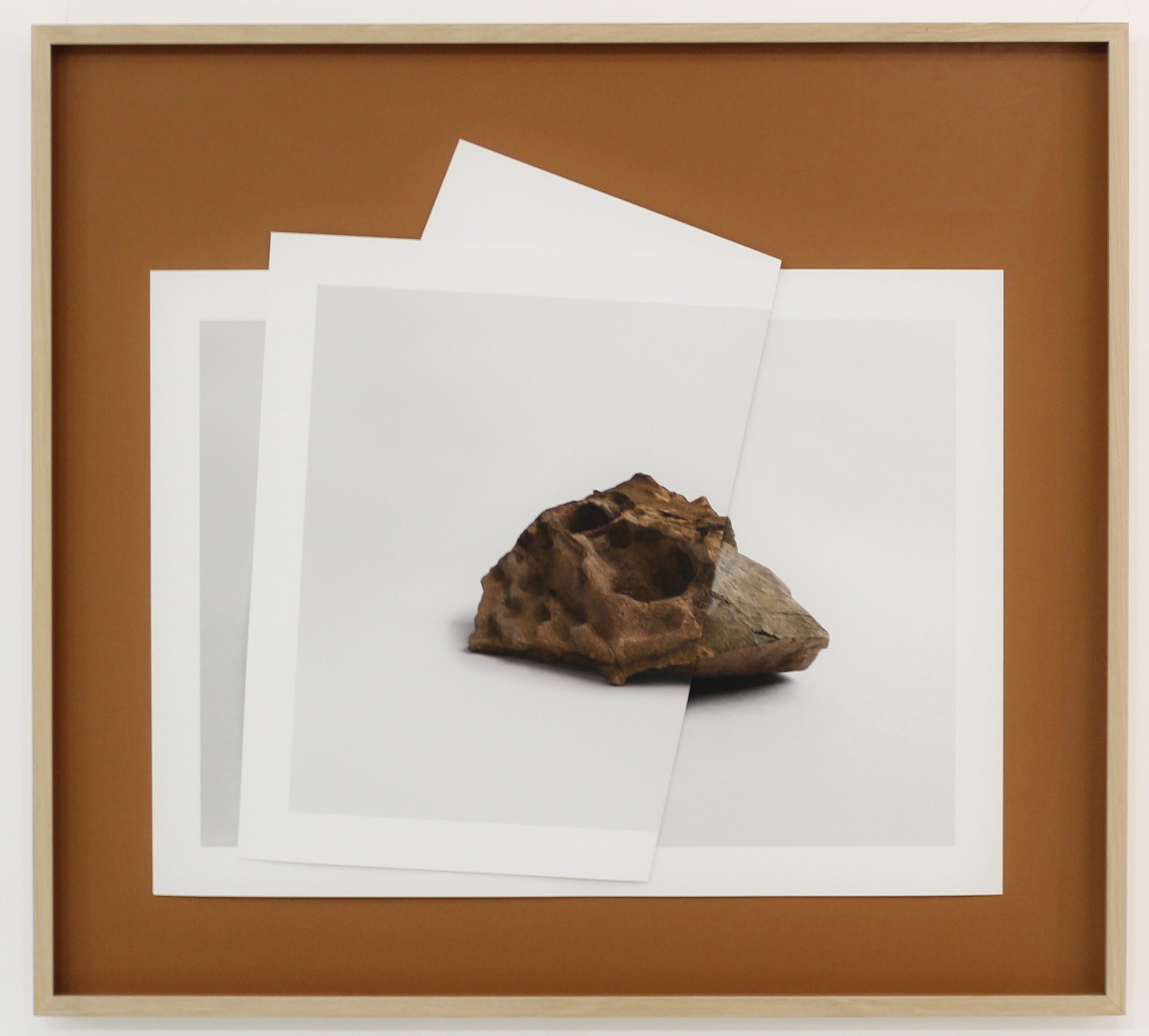
Kapwani Kiwanga, Subduction Study #10, 2018 © Courtesy de l’artiste et de la Galerie Poggi, Paris - ADAGP
EN ⭢ FR
La Filature, Mulhouse
May 16- July 11
Tuesday through Saturday from 1 p.m. to 6 p.m., Sunday from 2 p.m. to 6 p.m. (closed on Sundays in July), and on performance nights
Opening on saturday June 6 at 11 a.m.
Curator : Ange-Frédéric Koffi
Settled employs sedimentation processes as a metaphor for the modes of visibility and invisibility that characterise our era. Geological strata are at once visible and buried, present yet millennia-old, disclosing a history whilst simultaneously revealing its gaps. The artists gathered in this exhibition navigate the tension between accumulation and erasure, between revelation and concealment. Conceptually, the exhibition draws upon the notion of ambivalence currently explored within photographic scholarship. Rather than signifying mere indecision, ambivalence emerges here as the juxtaposition of antagonistic, often irreconcilable positions that permeate different strata of perception. This tension fundamentally shapes our relationship to the photographic image: even as photography enables us to unveil and archive reality, it simultaneously confronts us with the limits of that very visibility–with all that remains beyond the frame, inaccessible or fugitive.
The exhibition Settled is a co-production of La Filature, Mulhouse’s National Theater, and BPM - Biennale de la Photographie de Mulhouse.
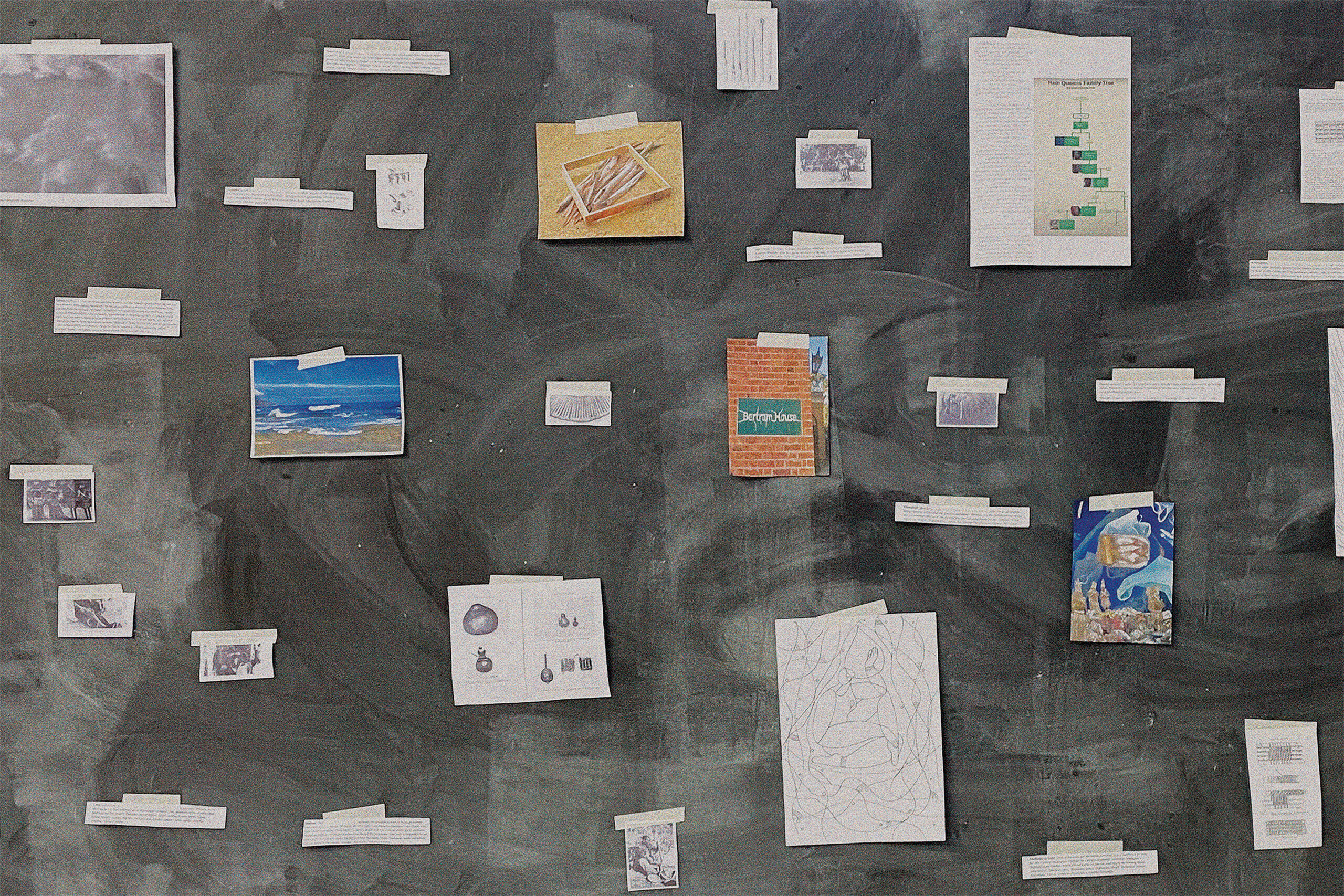
George Mahashe, Defunct Context - Ambivilance to important work, 2023
Adji Dieye (*1991, Milan) is a visual artist living and working between Dakar, Milan, and Zurich. Her practice interrogates notions of representation and identity to examine the socio-political structures shaping our globalized world. By exploring the role of culture in advertising, architecture, and national archives, she scrutinizes the forms of aesthetics of self-determination within neoliberal contexts. Photography is central to her work, serving both as a versatile medium and as a means to question representational “knowledge” and processes of othering across Western and Non-Western societies. She has participated in several international biennials, including the 16th Lyon Biennale (2022).
Born in France in 1984, Jennifer Douzenel lives and works in Paris. Her work—primarily films shot while traveling, but more recently also works derived from photographic images—captures the world in a snapshot. Imbued with the challenges of our humanity, the artist’s contemplative works draw on the history of painting and seek to awaken our sensitivity to the unfamiliar. Her work explores minute temporalities and micro-events that usually escape the eye, formalizing what might be called an “aesthetic of the interval”—an exploration of the gaps between the visible and the latent, between presence and erasure. She recently participated in the Regards du Louvre project (Louvre Museum), as well as in the exhibitions L’île intérieure at the Fondation Carmignac and Voyage Voyages at the MUCEM.
instagram.com/jenniferdouzenel
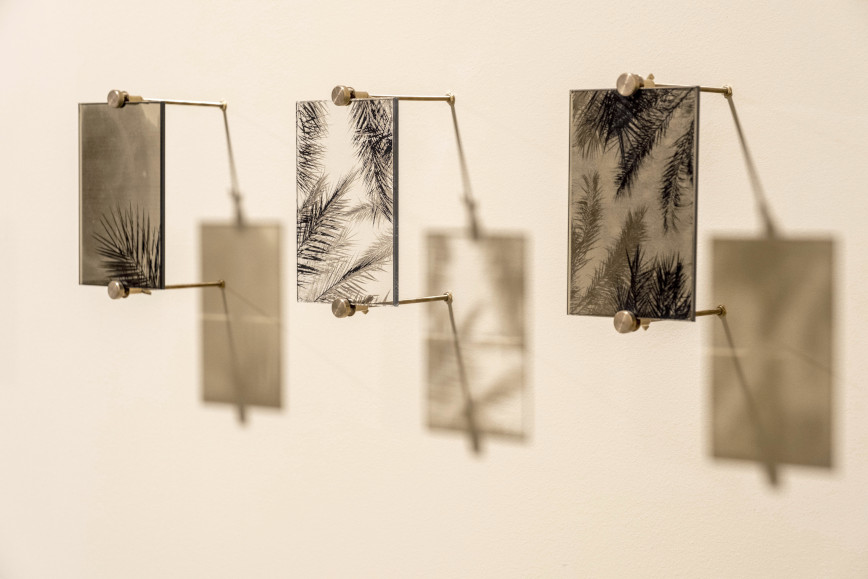
Jennifer Douzenel, Mirage, 2023. Vue de l'exposition Hirafen, Tunis, 2023
Eric Gyamfi (b. 1990, Ghana) is a Photographer/Artist, living and working in Ghana. His photographic practice explores the construction of visual archives, processes of social memory, and shifting identities. His work blends vernacular imagery, alternative photographic processes, and long-term visual investigations, treating photographic bodies of work as living, reconfigurable layers. His practice, situated at the intersection of expanded documentary and material experimentation, questions the stability of the image and its modes of transmission. His work has been exhibited at the Vienna Biennale (2021) and the Rencontres de Bamako (2017/2019), among other venues. He is the recipient of the FOAM Award (2019).
Kapwani Kiwanga (b. Hamilton, Canada) is a French and Canadian artist. She creates a transdisciplinary body of work (installation, photography, film, sculpture) that explores the relationships between power, history, and materiality, employing methods akin to investigative research and speculative ethnography. Winner of the Marcel Duchamp Prize (2020) and Canada’s representative at the Venice Biennale (2024), she has exhibited at the New Museum, the Serpentine Gallery, the Kunsthaus Zürich, MOCA Toronto, and numerous international biennials. Her work is widely collected and has been the subject of numerous publications.
George Mahashe is an Associate Professor in Fine Art at the University of Cape Town, South Africa, and a practicing artist. He convenes the research platform Defunct Context, which centres the curatorial as artistic practice. His work combines photography, anthropology, archives, and storytelling, foregrounding transdisciplinarity in responding to indigenous knowledge systems and engaging both its historic and emerging practices. His work explores the social performativity of the image and its historical layers, from the photography studio to contemporary public spaces.
Otobong Nkanga explores the connections between extraction, territories, bodies, and the circulation of materials through installations, drawings, performances, textiles, and photographs. Her work highlights the sedimentation of resources and narratives, as well as the affective cosmologies that arise from them. Her works are included in major international collections and have been the subject of numerous publications. A recipient of international awards, she regularly exhibits her work, such as at Documenta 14 (Kassel, 2017), or in solo exhibitions at the Martin-Gropius-Bau (Berlin, 2020) and the Musée d’Art Moderne de la Ville de Paris (2025).
Léonard Pongo is a visual artist living and working between the Democratic Republic of Congo and Belgium. His practice interlaces a lens-based approach with textile design, experimental printing techniques and moving images to form immersive mixed-media installations. Dividing his time between long-term projects in the DRC, teaching and commissions, Pongo is committed to expanding the visibility of African narratives. A recipient of awards and residencies, he has exhibited internationally in museums, biennials, and festivals. He is co-director of The Photographic Collective, a platform dedicated to supporting and amplifying the voices of African artists; mentors emerging artists at MINO Lab Antwerpen; and serves as a research associate at Thinking Tools at the Royal Academy of Fine Arts in Antwerp.
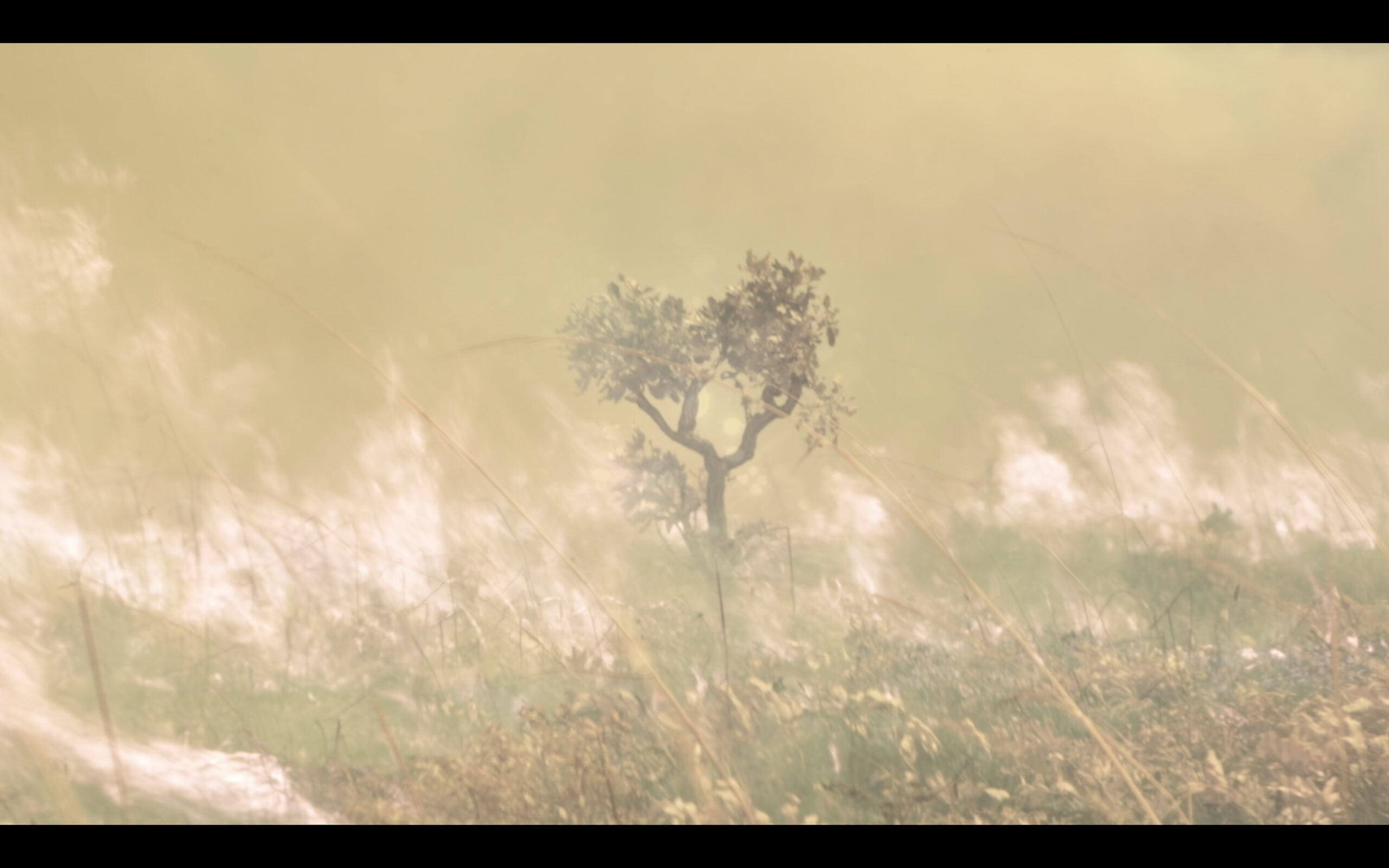
Léonard Pongo, screenshot from the video Tales from the source, 2023