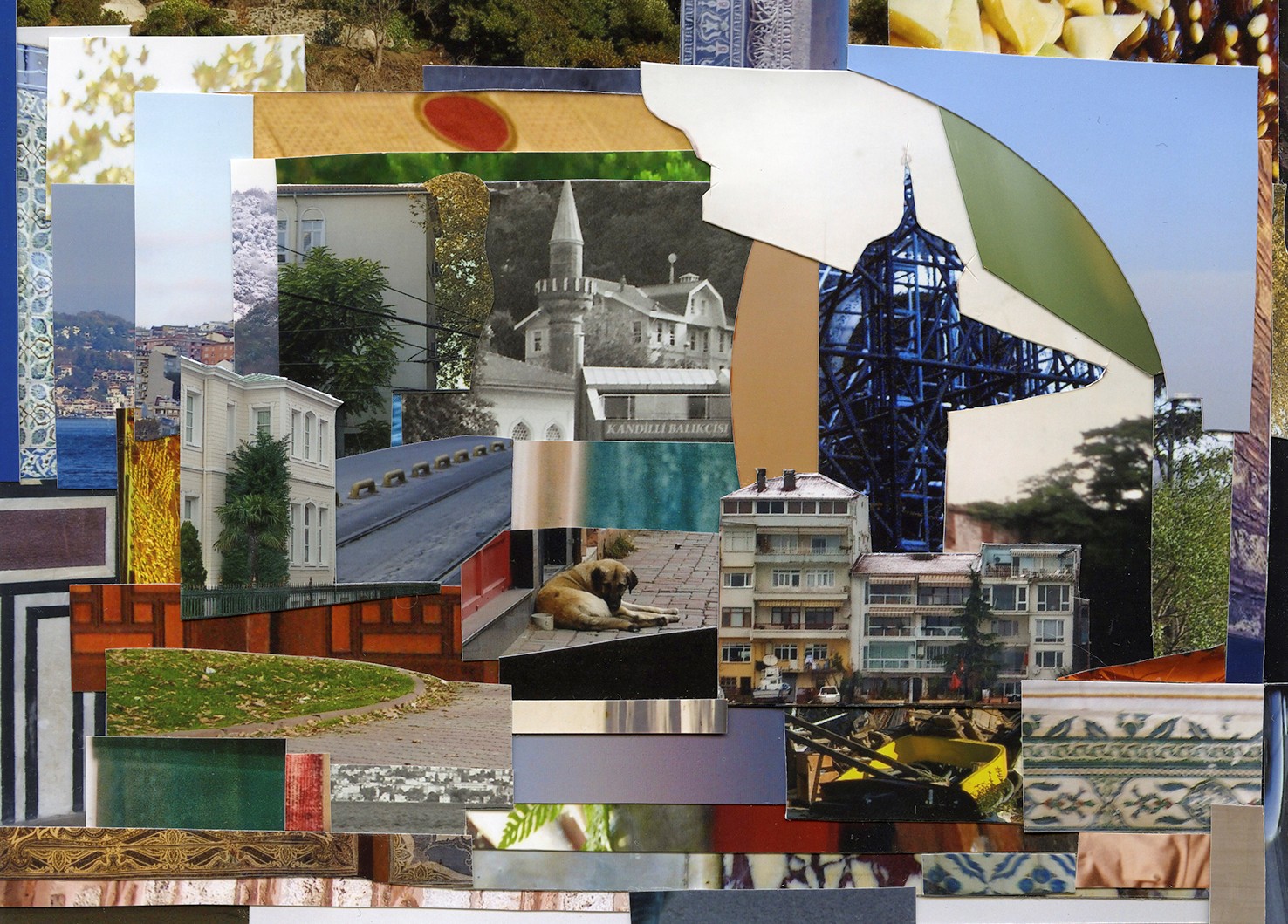
Lilly Lulay, Mindscapes , 2007 - en cours © courtesy de l’artiste
EN ⭢ FR
Städtische Galerie, MORAT-Hallen, Freiburg im Breisgau
May 22 - July 5
Thursday and Friday from 4 p.m. to 7:00 p.m., Saturday and Sunday from 11 a.m. to 5 p.m., closed on (German) public holidays
Opening on May 21 at 7p.m.
Guided tour on friday June 5
Curators : Eva Kallenberger et Camille Rey
Although the term of sedimentation comes from the field of geology, it has also found use in other areas. In us humans, as in nature, there are a multitude of sediments – layers of memory, depositions of moments and impressions, forming inner landscapes. They form us, influence our identity and determine how we perceive places in the future. And the memories themselves are also sedimentary: Memories don’t just consist of one perception; they are made of multiple sensory impressions and retellings, influenced by our emotions.
The artists presented in the exhibition examine photography as a medium of memory and investigate questions like: Which layers make up the memory of a place? How do these memories settle in us? How do the places I live influence me and who I am? How do I remember a place – and how do other people remember it?
They transform photographs – with needle and yarn, scissors and glue, or brush and paint –combining them with other photographs and layer medias and moments to visualize memories and connections of people and places. From these artistic practices stems a new, sedimentary technique, through which photography is – just like the visual impression in a memory – but one of multiple layers and perceptions.
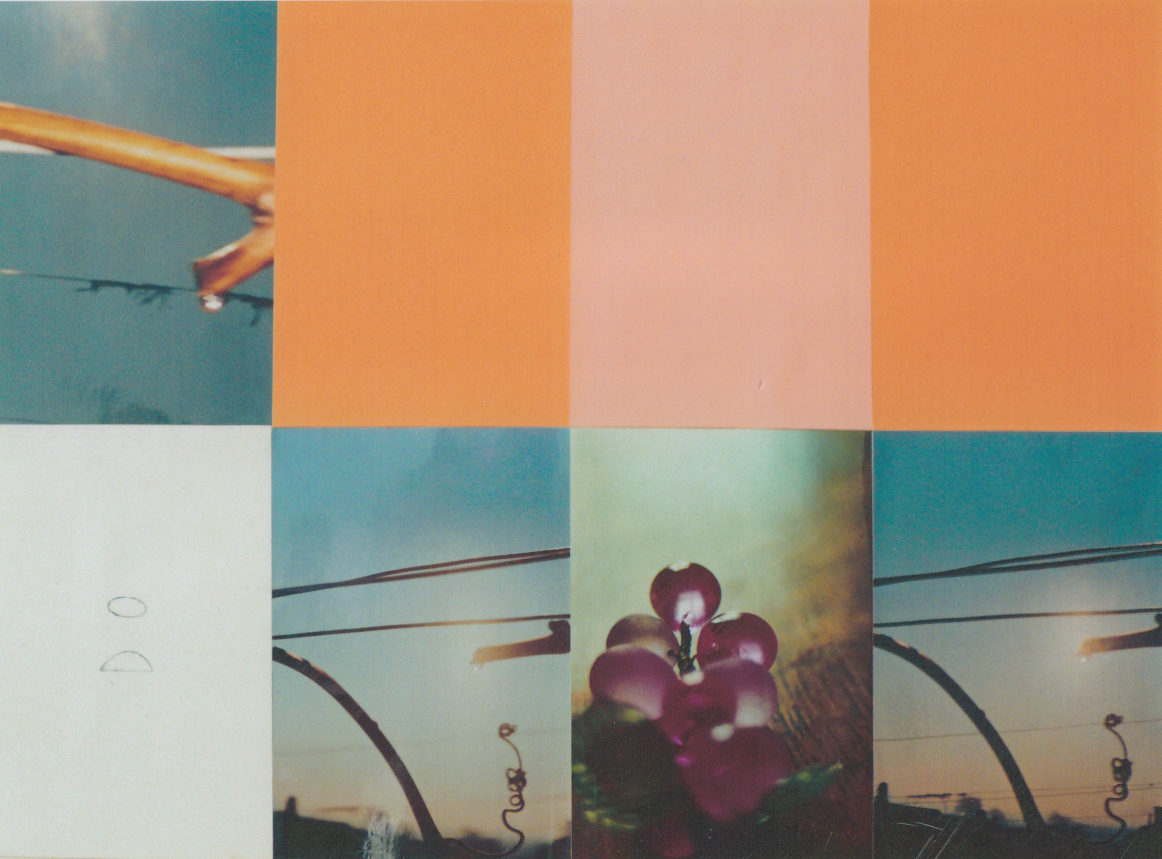
Sandra Eades, Excursion, 2006. Courtesy of the artist
In her Photo-Paintings, Sandra Eades combines analog photography with monochrome painting and watercolor drawing. She assembles these works based on associations of color. Terrain Sondieren and Excursions were created during and after walks through the vineyards of her former home in Ihringen.
The individual elements of the works do not form a straightforward documentation; rather, they form a composition of diverse impressions: a visual walk that invites the viewer to experience the place through feeling rather than visual recognition. A cobblestone dusted with snow, a monochrome black surface, or a drop of morning dew—these are fragments that evoke moods, memories, sensations, and even unusual, new associations, giving the viewer a sense of a place as they have never experienced it before.
Born in 1949 in Chelmsford, United Kingdom, Sandra Eades combines photography and painting, in the style of a collage, to create a distinct genre: “photo/painting.” She is one of the first artists to use this technique in this way. Sandra Eades’s series of images are based on photographic approaches to specific places and landscapes.
Instead of using scissors and glue or a digital program, Gisoo Kim chooses a special method to create her collages: She relies solely on needle and thread to combine her photographs. For her series Connected Spaces she uses analogue photographs which she took on walks, trips, in everyday life. After cutting them out, she layers them into a spiral-shape, overlapping one another. The hand sewn threads connect these impressions of landscapes and skies aesthetically and meaningfully: The inner connections and linkages of the places become visible. At the same time, the photographs cover one another and thus create new spaces and rooms. They invite the viewer to take a closer look.
In her installation, which was conceived especially for the exhibition, Kim combines the contentual idea of Connected Spaces with the three-dimensional forms, she has been experimenting with since 2022. As a student of sculpture, she also sees photographs as sculptural objects and moulds them into plastics. In parts hanging, in parts standing, a group of work forms, which invites to explore and retrace emotions and impressions.
Gisoo Kim was born in 1971 in Seoul in South Korea, Gisoo Kim now lives and works in Essen. She studied sculpture in South Korea and liberal arts in Hamburg and Düsseldorf. She mostly works on poetic photocollages where she stiches the pictures she takes with a yarn instead of gluing them together. She consciously leaves traces of her artistic intervention on the photographic image surface. „This way I bring together different places and situations that may be connected in a real or surreal manner“ she says.
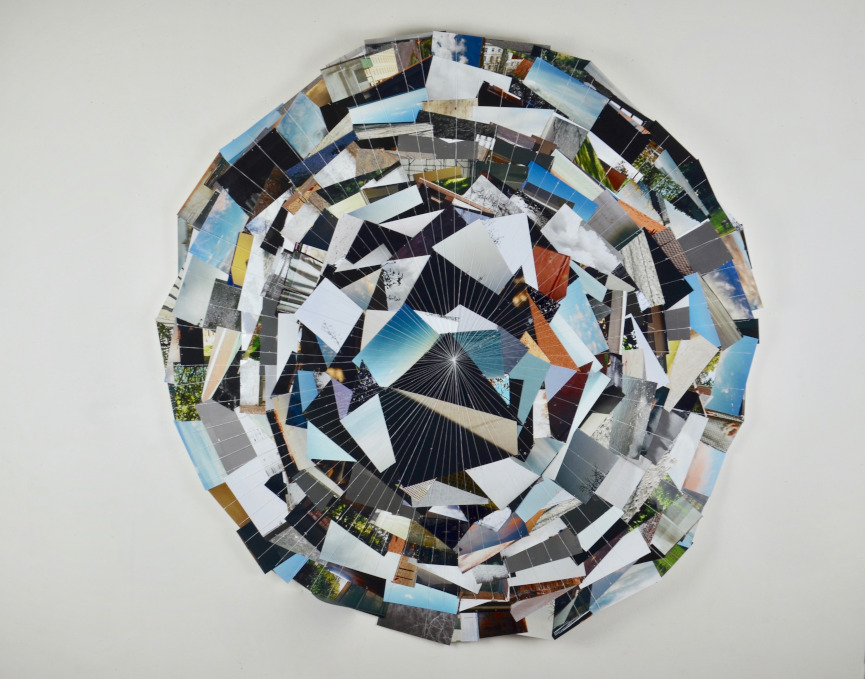
Gisoo Kim, Connected Spaces, 2025
In her artistic practice, Lilly Lulay explores photography as a medium of memory, among other things. In the two works on display, she primarily works with photographs that she finds at flea markets, online, or receives from her circle of friends.
In her Mindscapes series (started in 2007), she seeks to create “[…] scenes of an inner world of memory and imagination, inaccessible to any camera […]” through collages. By layering fragments of other people’s life’s moments, she constructs an abstract landscape.
The video Brussels (2025) shows a slow layering of photographs of the city where she lived for six years. Shapes and figures in these photographs are partially cut out, revealing the images beneath. This creates a video-collage of photographs made by the artist as well as by the city’s residents and visitors, accompanied by everyday city sounds. A collective impression of the city emerges here from many individual, personal experiences. Lulay examines how a place is shaped by the memories of its inhabitants, by sounds, and by impressions—and how these elements can bring it to life.
Lilli Lulay was born 1985 in Frankfurt, studied photography, sculpture and media sociology in Germany and France. Her works examine photography as a cultural tool at the center of daily life. Perfectly aware of todays overproduction of images Lulay uses own and other peoples photographs as "raw material". She turns photographs into palpable objects.
Dalmonia Rognean grew up near two archaeological excavation sites – as a child she had often imagined what it would be like to dig there herself. In her installation When the old rivers turn, we hide, we seek, she follows this impulse: like an archaeologist, she conducts metaphorical excavations in the landscape of her homeland. Through photography, research, memories, and imagination, she uncovers new historical or fantastical layers and makes them tangible through the overlapping of photographs, recordings, and drawings.
At the same time, the work also addresses a critical aspect of archaeology: just as in Rognean’s investigations, personal experience and perspective inevitably influence the seemingly objective study of artifacts – through the selection of objects, their handling, and their contextualization. But Rognean does not view this as a negative; she rather asks: Which personal layers are hidden within our history?
Dalmonia Rognean was born in 1993 in Brașov, Romania. She lives and works in Vienna, where she is currently studying Photography and Time-based Media at the University of Applied Arts. Her artistic practice focuses on the creation of possible worlds: by grounding her images in real-life situations, she transcends them to construct a universe where multiple narratives coexist and overlap. Developing a practice that is both documentary and conceptual, she explores societal themes, particularly anthropological ones, questioning human behaviors and the invisible structures that shape our collective experiences.
When Wenke Seeman’s father died, he left her his archive of photographies: Ten packing boxes full of prints and negatives, many of them taken in the new development area of Rostock in the 1970s and 1980s. Since 2019 Seemann is working through this material artistically for her series Archivdialoge #1 – Bauplan Zukunft. She confronts the photographs her dad took, which symbolize a fresh start, progress and modernity, with her own childhood and youth memories of the city during the GDR and post-wall era, crossing genres and media.
For the collage series Deconstructing Plattenbau Seemann dissects photographs of architecture and restructures them, shifting them into the aesthetic tension of modernity. For her film Plattenbaugeschichten she combines archival pictures with her own associative research text, the composition of both enabling room to reflect on the past, the present and the future. The art works grasp memories and experiences in layers: They visualize the temporal distance, but also the emotional connection to the place of her childhood. Different viewpoints – between Utopia and Demystification – melt together into one multi-facetted picture of space and time.
Wenke Seemann was born in 1978 in Rostock, Germany. In 2000 she finished her studies in philosophy at the university of Rostock as well as 2005 her studies of social sciences at the Humboldt university of Berlin. In 2010 she started taking courses in photography before training as a professional photographer with Frank Gauditz. Since then, Seemann works as a commissioned photographer as well as an artist. For her artworks she was awarded multiple residencies, including in Belgrade, Serbia and Berlin.
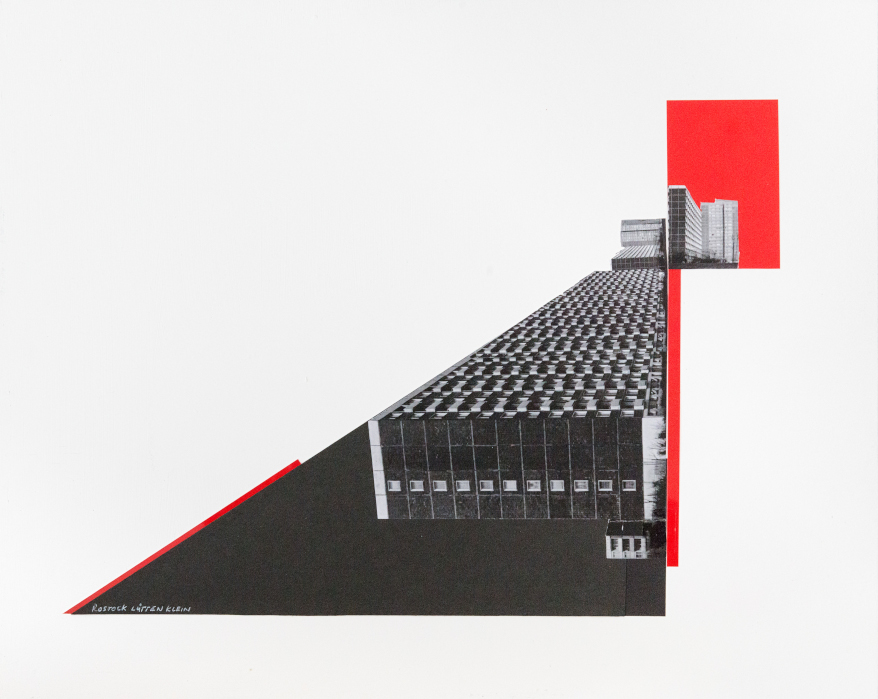
Wenke Seemann, Deconstructing Plattenbau – Lütten Klein #1, 2020/2021©️ Wenke Seemann / VG Bild-Kunst, Bonn 2026