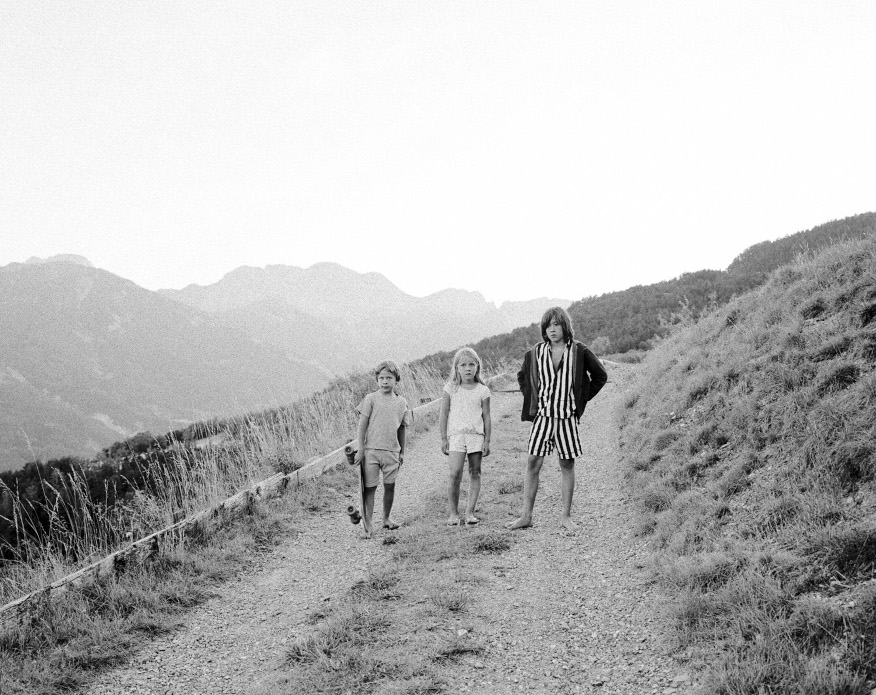
François Jonquet, Forage, 2023
EN ⭢ FR
La KunstTurm, Europe Tower (14th floor), Mulhouse
June 6 - July 5
Saturday and Sunday from 2 p.m. to 6 p.m.
Opening on Saturday June 6 at 10 a.m.
Curator : Magali Avezou
“The exhibition space is located in what is commonly referred to as a skyscraper, the Europe Tower in Mulhouse. The 1970s apartment belongs to a couple of art collectors. It features a living room, two bedrooms, and a kitchen where only part of the backsplash remains. Everything else is empty. Yet stories fill the space. Bruissements takes its starting point here to reflect on the domestic sphere, the bonds that are forged within it, and to gather stories—like the sediment of intimacy.
Ulf Lundin (Sweden) observes a young family through a telephoto lens for a year, drawing us into their private lives while highlighting the unique characteristics of this social unit. François Jonquet (France), for his part, recounts his family life from the inside, across the years, beautiful in its banality. Margot Wallard (France) tells us of transgenerational stories as she explores her grandmother’s Algerian life, which has so deeply influenced her own that she sets out to follow in her footsteps in Oran. A Ukrainian exile in Finland, Katya Lesiv (Ukraine) evokes the thwarted desire to return, to “come home,” as if returning to oneself, when circumstances—such as war—prevent it. Eleonora Calvelli, for her part, draws us into the mysteries of televised intimacy, the reality shows where bodies hide and reveal themselves under the unblushing gaze of the cameras. Natalie Malisse tells us about a different kind of home—that of her childhood, one marked by abuse. Like Rebecca Bowring, for whom the domestic space became, for a time, a space of entrapment.
Taking a variety of approaches—sometimes documentary, sometimes conceptual—these seven projects explore the connections formed by the domestic sphere, understood as a space of intimacy. A space that serves as an enclosure, the perimeter of a set of human relationships generally related to the family structure, with its emotions and traumas, its violence and its solidarity.”
Magali Avezou
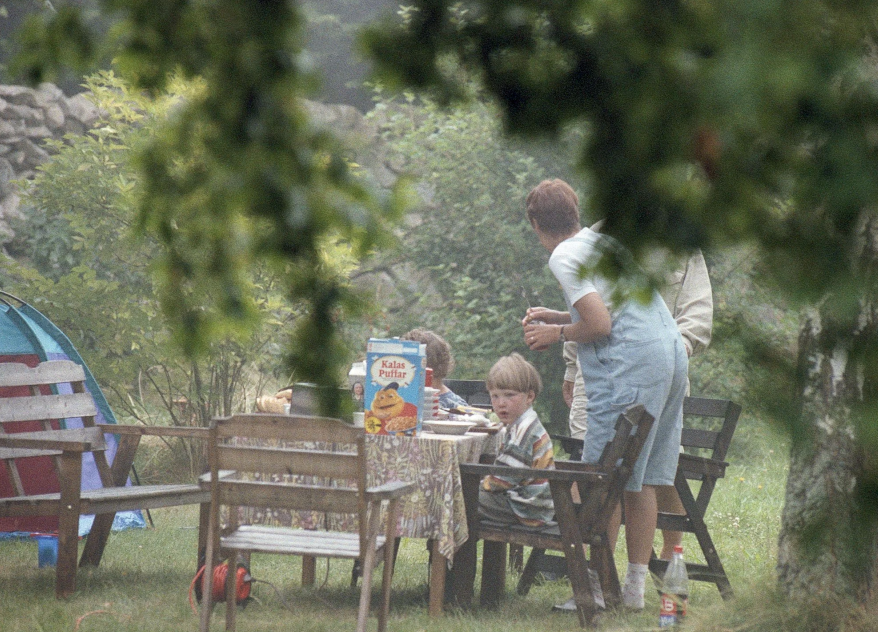
Ulf Lundin, Pictures of family, 1996
“As the lockdown began to take hold in our minds and our lives, I was struck by how familiar this sense of separation from friends, family, and life as I knew it felt. It was as if I had experienced this feeling before.
I used the time afforded by lockdown to sort through photographs I had taken a few years earlier with a film camera. Looking at them again, I noticed that they captured both a sense of confinement and a search for escape. I realized that taking these photos was a way to breathe, a means of detaching myself from impossible situations to escape my partner’s control.
Existing images on the theme of domestic violence did not represent what I was experiencing. I didn’t recognize myself in the bruises, broken ribs, or flowing blood. Through this project, I offer a different perspective on the photographic representation of domestic violence. I pasted some of my photos on the walls of my home and photographed them again to visually represent the emotional experience I had felt. I added more photos as they were, to create a sense of uncertainty and to represent the multifaceted and complex—and sometimes contradictory—emotions involved in being trapped in a toxic relationship: loneliness, constant adaptation, and self-effacement, all to avoid provoking the storm that is never far away.
- Rebecca Bowring
Rebecca Bowring conceives of photography as a space for thought and experimentation where our memories intersect with the material forms of the image. She uses traditional processes such as platinum, cyanotype, and solar printing; reworks existing images; and works with organic or textile media to explore the materiality of photography. She explores how an image can retain an intimate presence in our lives beyond its momentary capture. Her research, informed by both personal and collective experiences, reveals how images accompany our lives, become memory, and forge connections. Her work is regularly exhibited in Switzerland and internationally, notably at the Centre de la Photographie in Geneva, Galerie Focale, the Textilmuseum St. Gallen, the De Pietri Artphilein Foundation in Ticino, the Biel Photography Days, the Verzasca Foto Festival, as well as the Helsinki Photo Festival and Exposure+ in Kuala Lumpur.
Making Love to G. is gonna be like the first time I tried a cheeseburger is a project launched in 2012 that explores how reality TV shows—which play on themes such as intimacy, voyeurism, and violence—offer a unique vantage point for understanding the development of the cultural industry and how the market colonizes mass communication. The project consists of two photographic series. The first part comprises black-and-white photographs taken from a television screen, capturing several still images from DVDs of the British series Geordie Shore. The work focuses exclusively on moments when cast members/participants are having sex with other occupants of the house. The second part of the project presents color photographs of young women fighting and hitting each other, extracted from YouTube videos viewed on a computer screen, showing scenes from the reality TV show Bad Girls Club, which features quarrels and physical confrontations between the participants.
Eleonora Calvelli is an Italian photographer who works on long-term independent projects focused on social and cultural issues. In In Bloom, she explored Italian same-sex parent couples with children conceived through “assisted reproductive technology.” This series received the patronage of Amnesty International and was published in 2013 under the title In Bloom (Postcart, Rome). Making Love To G. Is Gonna Be Like The First Time I Tried A Cheeseburger is a series dedicated to reality TV shows, self-published as an artist’s book in 2023. The book won the Marco Bastianelli Prize and was selected for a group exhibition curated by Erik Kessels. Her work has been exhibited internationally at festivals such as the Noorderlicht International Photo Festival (Netherlands), Fotografia Europea/Off in Reggio Emilia (Italy), and the Athens Art Book Fair (Greece).
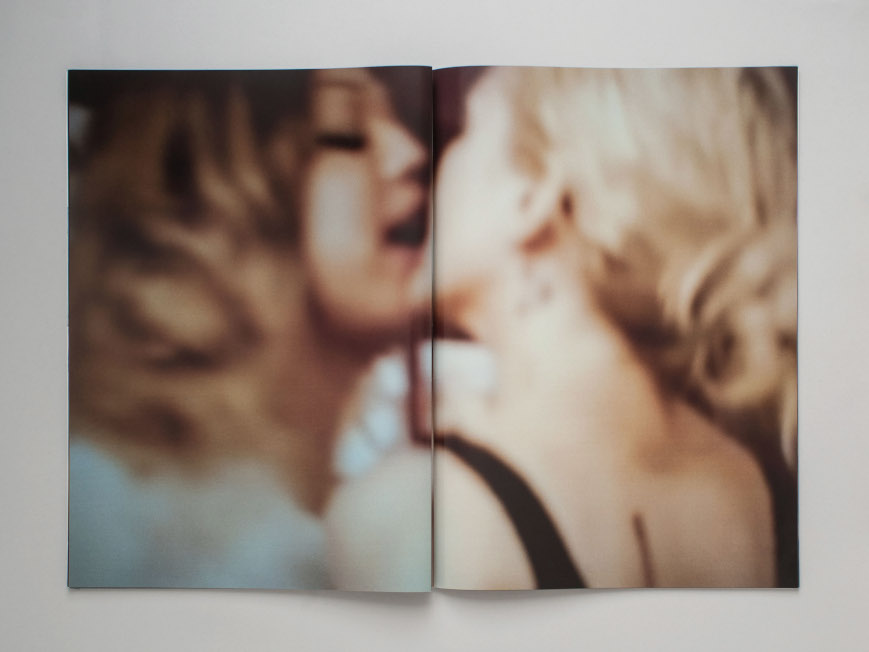
Eleonora Calvelli, Making Love to G. is gonna be like the first time I tried a cheeseburger, 2023
“My family is an archipelago of five islands connected by underwater foundations. I feel as though I am both with and beside these islands, observing them from an outside perspective. Maintaining a certain distance allows me to photograph them. But deep down, I long for that distance to shrink. Forage captures everyday moments of family life spanning two decades.”
François Jonquet
“I was born in 1967 and grew up in a large family with my parents and two sisters in the Paris suburbs. We didn’t have a camera at home, so my earliest memories of photographs are from Christmas evenings at my maternal grandparents’ house, when we would watch a slideshow of family photos and Super 8 films (my mother has eight siblings).
My first camera belonged to my partner, whom I met at our neighborhood high school. We took photos of each other right from the start of our relationship. After the birth of our first son, I returned to photography. Like other fathers, I wanted to capture my new life as it began, though not without some apprehension. A brother and a sister soon followed.
Very quickly, taking photographs of my family became my life in every way. Today, we live in Bordeaux; I’m a general practitioner for people who communicate in French Sign Language at the university hospital. I’ve been taking photos since my late teens, and my work focuses on my family and the “ordinary.”
François Jonquet
"From my earliest childhood, the act of eating berries from either a tree or a bush has been one of my most cherished and deeply beloved activities. The mulberry in the parents’ garden, with its milky sweet aftertaste, has become a support, maternal in its nature. The body is nourished by the intention to return to the ritual, while recognizing the time required for the earthly cycle to be completed. Trees and bushes do not bear fruit throughout the year; the steps, rains, birds, sun, explosions and gatherings may not fit into concrete decisions. The project reflects on personal anchors and subtle connections during the period of Russia’s full-scale invasion of Ukraine. In times of losing the sense of basic security, the confidence of a new quality arises, a feeling bordering on total trust/surrender/immersion, which allows you to be sensitive to the elemental space. A state where the difference between intention and decision becomes clear. Planning and decision-making are painful to contemplate without irony, while the intention tastes like tranquility, gaining the same life force as the sensory experience that forms the body. In the realm of intention, doubt melts away; it is breathing as a body, a flexible monument, quiet, “that which matures,” sprouting, not at all fragile.
-Katya Lesiv
Katya Lesiv (born in 1993, Ukraine) is a visual artist and photographer currently based in Finland. Her practice explores themes of cycles and physicality, emotional experience, and motherhood through photography, artist books, installation, text, and moving images. Often rooted in daily rituals, her performative approach seeks to preserve intimacy while creating spaces of shared presence. The book occupies a central place in her work, frequently becoming the final form of her projects.
Lesiv’s works have been featured in solo exhibitions in Ukraine, Finland, and the Netherlands, as well as in international group exhibitions. Her photobook Lullaby 1 was selected as one of the 100 best photobooks in How We See: Photobooks by Women (10×10 Photobooks), and her book I love you was shortlisted for the Aperture PhotoBook Awards in 2022.
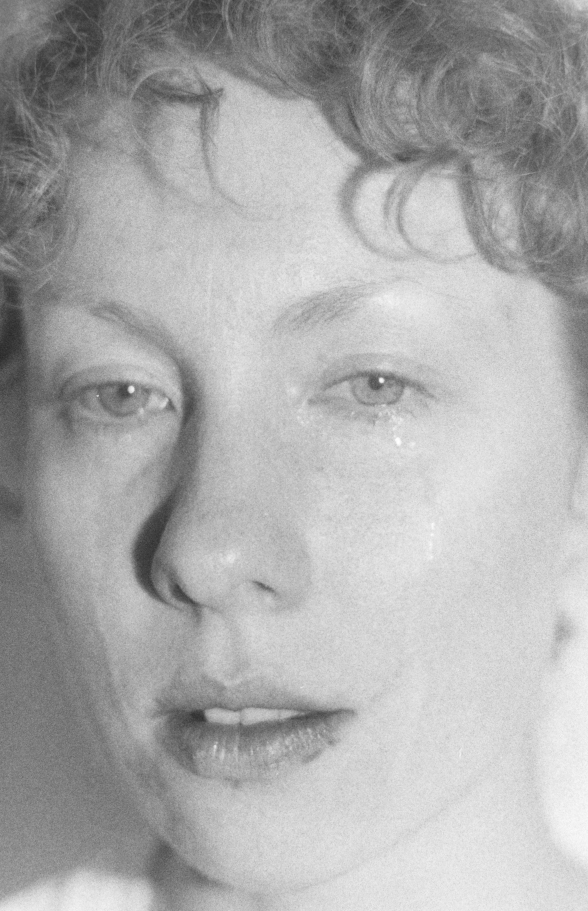
Katya Lesiv, I am going home to eat mulberries from the tree, 2023-2024
“When we first met, we were standing shoulder to shoulder, leaning against the gable of the Nolby Elementary School. A few yards in front of us, his older brother and some of his friends were lined up like a firing squad, brandishing pointed sticks with freshly stolen apples stuck on the ends. The apples were hurled at us with considerable force, but none of them hit us. Standing next to him, I could feel his body tense every time an apple smashed against the pale yellow wall behind us. We lived in the same neighborhood, and that fall, we became friends. He was a grade ahead of me and by far the more daring of the two of us. He was always the one to take the first step, and I was the one to follow. He always chose a higher spot to jump from. He had sex before I did, and by the time I was thinking of buying a moped, he had already sold his.
He still lives in the town where we grew up and now has a wife, two sons, a townhouse, and a steady job. The predictability of his life both horrifies and fascinates me. It’s hard to pinpoint exactly which choices—if any—have shaped the lives we lead today. I spied on him and his family for a year and secretly photographed them. There are over a hundred rolls of film in my archives. We drew up a contract in which they gave me permission to spy on them. In other words, they know I’m there, but they don’t know when.
- Ulf Lundin
Ulf Lundin was born in 1965 in Alingsås, Sweden, and studied photography at the School of Photography at the University of Gothenburg (MFA, 1997). He currently lives in Stockholm and works as an artist, primarily in the fields of video and photography. For many years, he has been interested in issues related to photography and the photographic gaze, as well as everyday life. He employs different strategies depending on the project to make the ordinary interesting. His work has been exhibited at venues including Galleri Magnus Karlsson (Sweden), Kunsthall 3.14 in Bergen (Norway, 2020), and the Bandung Photography Triennial in Indonesia (2025). Lundin is represented by Galleri Magnus Karlsson in Stockholm. He has published four books, including Best of Sweden, released in 2023, and Pictures of a Family, released in 2024.
“The night brings us back to the memories that our days strive to forget.”
La grande maison is a photographic project that examines domestic violence. This exploration, conducted as a kind of psychological inquiry into the sites of the artist’s childhood, captures fragments of memory that haunt a series of recurring nightmares. Photographs and texts probe a mental space whose boundaries extend beyond the visible, tracking the wounds and silent shadows within the paternal home. Polaroid and film images expose the silent violence hidden behind appearances and the code of silence that surrounds it.
Natalie Malisse is a Belgian photographer who trained at the École Supérieure des Arts de l’Image “Le 75” and the Royal Academy of Fine Arts in Ghent (KASK). She lives and works in Brussels. Her artistic practice explores the layers that shape us and uses imagery to examine territories linked to traumatic memory, mental health, disability, and gender inequalities. Her photographs, exhibited in Belgium and France, are featured as part of Circulation(s), the Prix National Photographie Ouverte (Charleroi Museum of Photography, Belgium), the Prix Médiatine (Wolubilis Cultural Center, Belgium), and the Festival OFF Arles. La grande maison, published by Éditions du Caïd, is her first book.
“For us, Algeria was the backdrop to our many family gatherings. My grandmother, the true pillar of the family, spoke of Algeria every day. She was obsessed with that country, to which she had never returned. Algeria never ceased to haunt her life in France. Even though she hated politics, there was no bitterness in her words, rather a deep melancholy and love for the country.”
Margot Wallard, the granddaughter of pieds-noirs, explores the family archives after her grandmother’s death and sets out to trace her family’s roots for the first time in 2018, in a city she knows only through her grandmother’s stories.
Margot Wallard (b. 1978, France) is a photographer based in Montreuil. Her work explores the connections between place, memory, and intimacy. She is interested in family heritage, human relationships, and loss. She is represented by Galerie Dorothée Nilsson (Berlin) and Galerie VU’ (Paris). She has published several books, including Mon frère Guillaume et Sonia (Journal, 2013) and Natten (Max Ström, 2017). Her work has been exhibited at Encontros Da Imagen (Portugal), the Planches Contacts Festival (France), the MEP (France), and the Landskrona Fotofestival (Sweden), among others. In 2026, her project Oran will be published by Le Bec en l’air. She is represented by Galerie Dorothée Nilsson (Berlin) and Galerie VU’ (Paris).
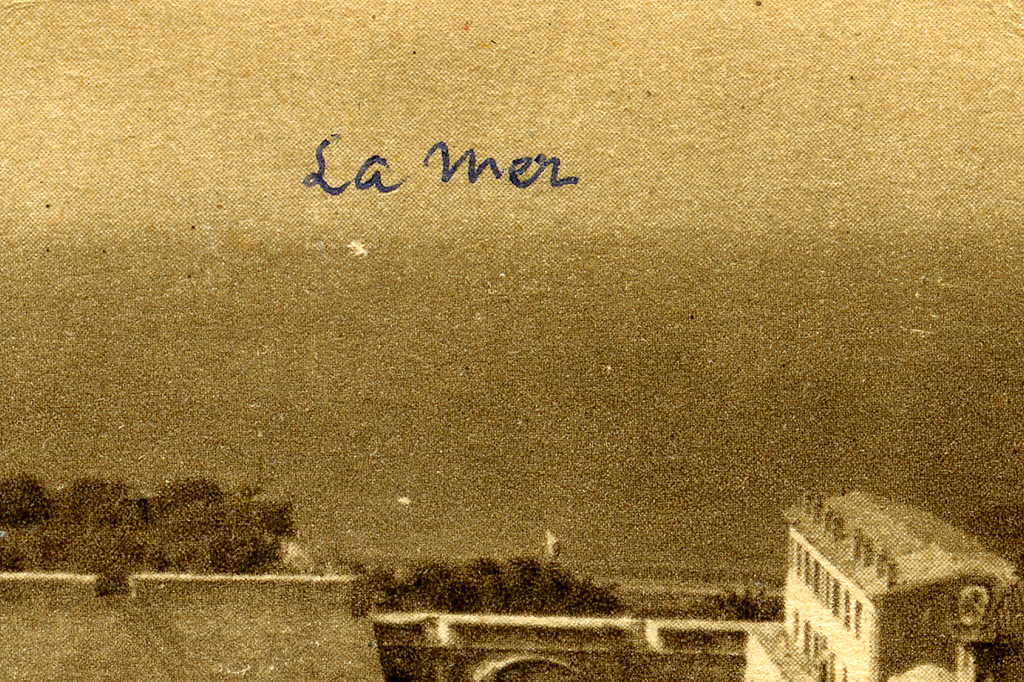
Margot Wallard, Oran, 2018 - en cours